
Bat Removal & Exclusion
Bat Removal & Exclusion in Penn Yan, NY
Bat problems often involve upper portions of a structure where access can be difficult to see from the ground. Little Wolf evaluates where the activity is occurring, how bats may be using the building and what removal or exclusion approach is appropriate for the property.
What a bat job covers
- Roofline & soffit access
- Drip edges, fascia joints and soffit-to-fascia transitions high on the structure.
- Attic activity
- Evidence, sound and evidence of roosting inside the attic volume.
- Dusk emergence patterns
- Repeated activity at one part of the building, evaluated over time.
- Bat exclusion
- Structural work addressing active access once it is understood.
- Indoor bat situations
- A bat inside the living space is handled differently from an attic concern.
Roosting behavior
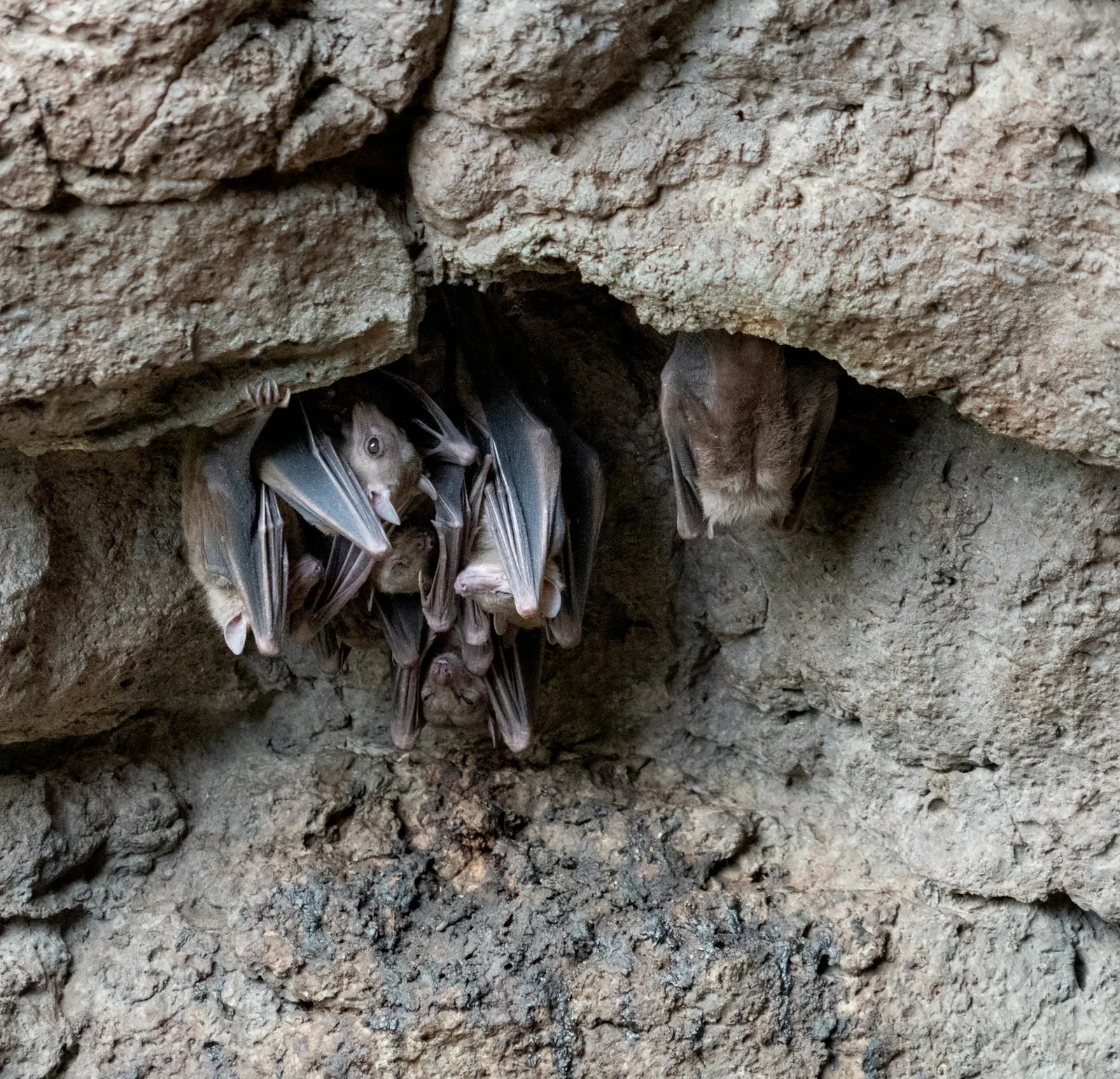
Bats roost in groups, tight against a surface
Bats do not chew their way in. They use gaps that already exist and then roost pressed against the surface above them, which is why activity can be present for a long time before anyone notices it.
That behavior is the whole reason bat work is sequenced differently: the roost has to be able to leave on its own before anything is sealed.
Bat inside the home?
A bat inside the living space is different from bats using an attic or roofline.
If a bat is flying inside an occupied part of the home, the situation should be handled differently from a standard attic or exterior bat concern.
Where possible, avoid direct contact and keep people and pets away from the bat. If contact may have occurred — or cannot confidently be ruled out — contact your local health department for guidance.
Upper Structural Access
Bat problems often begin high on the structure.
Access frequently involves protected upper-building areas that are difficult to evaluate from ground level, where materials overlap and small transitions are hard to see.
Construction differs from property to property. One building may have several upper areas worth evaluating while another has one, and no single feature can be described as the way bats enter every home. Inspection areas commonly include:
- Roof edges and drip-edge transitions
- Soffit panels and soffit-to-fascia joints
- Fascia boards and trim transitions
- Rake edges along gable ends
- Attic and roof vents
- Roof-to-wall intersections
- Flashing transitions and step flashing
- Upper exterior trim and corner boards
- Additions, dormers and roofline changes
Activity Indicators
Signs Bats May Be Using the Structure
No single sign on its own confirms that bats are using a building. Read together, these observations help describe where activity is concentrated and which parts of the structure should be evaluated.
- Repeated dusk activity
- Bats repeatedly emerging from or returning to the same part of a structure around dusk can be an important clue.
- Sounds above living areas
- Light movement, scratching or vocal activity may sometimes be noticed around attic or upper wall spaces.
- Droppings below a suspected area
- Material accumulating beneath a repeatedly used location may provide another clue when evaluated with the overall activity.
- Visible access activity
- Repeated movement into or out of the same structural opening may indicate an active access location.
- Attic evidence
- Signs inside the attic may help determine whether bats are using the building itself.
- Recurring indoor bats
- Repeated bats appearing inside may justify evaluating attic and upper structural areas.
What the Activity Means
Seeing bats outside does not automatically mean they are living in your house.
Bats naturally fly through residential areas, and watching them move through the yard at dusk is a normal observation rather than evidence of a structural problem.
General outdoor activity
Bats in the air over a yard, along a treeline or around outdoor lighting are moving through the area. On its own, that observation says little about the building.
Activity tied to the structure
Repeatedly seeing bats emerge from the same roofline, vent, fascia or soffit area, or from one consistent section of the building, is a different observation and worth evaluating.
Interior and attic indicators
Recurring bats inside the living space, attic evidence or repeated activity around a specific opening are separate from general outdoor sightings and are considered together during an inspection.
Structural Map
Where Bat Activity Can Develop Around a Building
Bat work concentrates on the top of a structure and works downward — from the roof plane through the edges, trim and upper wall systems.
Attics
Protected interior volume directly beneath the roof structure.
Soffits
Enclosed panels beneath the roof overhang, often with concealed cavity space behind them.
Fascia
Board along the roof edge where overlapping materials and trim meet.
Rake edges
Sloped gable-end edges where roofing, trim and siding come together.
Attic / roof vents
Gable, ridge and box vents and the framing or screening around them.
Roof-wall transitions
Points where a roof plane meets a wall, an addition or a dormer.
Flashing areas
Metal transitions that can shift or separate slightly as a building ages.
Upper wall systems
Concealed cavities in upper walls that connect to other structural spaces.
Exterior trim transitions
Corner boards, frieze boards and trim joints high on the structure.
Behavior
Why Bats Sometimes Use Buildings
Protected building spaces may sometimes provide suitable shelter and roosting conditions. Bat activity on a property is not a reflection of how well a home is kept.
- Protected upper spaces
- Sheltered areas high on a structure can be quiet and undisturbed.
- Structural cavities
- Concealed spaces behind or between building materials may offer cover.
- Attic environments
- Attics can provide stable, protected conditions compared with the outdoors.
- Construction gaps
- Access is often associated with how materials meet rather than with damage.
- Seasonal patterns
- Use of a structure can vary through the year depending on conditions.
- Existing openings
- An opening that already exists is easier to use than one that does not.
Entry Points
Bat access can be subtle from the ground.
Much of what matters on a bat job is a property condition rather than obvious damage — which is why the building itself is inspected instead of the sighting alone.
- Overlapping construction materials at the roof edge
- Gaps behind fascia boards or exterior trim
- Edges and framing around attic or roof vents
- Soffit transitions and separated soffit panels
- Flashing that has shifted or separated slightly
- Roof junctions where planes and walls meet
- Small displaced or loosened building materials
- Roofline changes where additions meet the original structure
- Aging exterior components high on the building
Conditions that look minor from the driveway can matter more than conditions that look dramatic, and not every gap on a building is being used. Openings are evaluated in relation to the activity described rather than in isolation.
Bat Exclusion
The structure has to be part of the solution.
Bat exclusion focuses on understanding active access and the structural conditions bats are using, rather than applying the same treatment to every building.
The appropriate approach can depend on the activity present, the construction of the building, the location of active access, other structural openings, timing and the conditions discovered during inspection. Those factors are evaluated together before a plan is recommended.
Exclusion Planning
Bat exclusion has to account for what is happening inside the structure.
Suspected bat access should be evaluated before openings are simply closed. The appropriate timing and approach depend on the activity and conditions present at the property.
That evaluation is part of the work rather than a delay in it — closing access without understanding the activity can make a situation harder to resolve.
Inside the Structure
Bat activity often leads the inspection into the attic.
What is visible from the exterior only tells part of the story. The interior of the upper structure frequently clarifies whether bats are using the building.
- Roof decking
- Rafters and framing
- Upper wall transitions
- Vent areas
- Roofline intersections
- Insulation surfaces
- Daylight around structural openings
- Suspected roosting areas
If insulation or attic materials have been affected by wildlife activity, Little Wolf also provides attic insulation removal and installation where appropriate. That is determined by the condition of the space, not assumed on every bat job.
Two Different Jobs
Bat Removal and Bat Exclusion Address Different Parts of the Problem
Depending on what is found at the property, a job may involve one, the other or both.
Bat removal
Addresses the active wildlife situation
This is the response to what is happening at the property now — a bat in the living space, activity in an attic or repeated activity around a specific part of the structure.
Bat exclusion
Addresses how the structure is accessed
This is work focused on the upper-structure conditions bats may be using. The appropriate service plan depends on what is actually happening at the property.
Our Approach
How Little Wolf Approaches Bat Problems
The specifics change from property to property. The order of thinking stays consistent.
First
Understand the activity
Determine whether the concern involves an indoor bat, attic activity, repeated roofline activity or another structural condition.
Then
Inspect the structure
Evaluate the relevant upper-building areas and likely access conditions.
Next
Determine the appropriate approach
Removal or exclusion recommendations depend on the activity and conditions found.
Finally
Address structural access where appropriate
Relevant access points and vulnerable structural areas can then be addressed using the appropriate exclusion strategy.
Local Bat Removal
Bat Removal from Penn Yan Across the Finger Lakes & Surrounding Region
Little Wolf Wildlife Control is based in Penn Yan and serves homeowners and property owners throughout the Finger Lakes and surrounding region.
Based in Penn Yan, New York
Bat work in the region regularly involves older rooflines, additions, gable ends and aging trim — upper-structure conditions worth evaluating carefully before any access is closed.
Bat Questions
Questions property owners ask about bats
Answers here are general. What applies to your property depends on what is found during an inspection.
- How are bats getting into my attic?
- Usually through an existing condition high on the structure rather than through obvious damage. Roof edges, soffit and fascia transitions, rake edges, vent areas, flashing and roof-to-wall intersections are all worth evaluating. Which of them applies depends on how the building was constructed, modified and maintained, which is why the structure is inspected rather than assumed.
- Does one bat in the house mean bats are living in the attic?
- Not by itself. A single bat inside does not establish that bats are roosting in the attic. Repeated activity, observations around the exterior at dusk and evidence found inside the structure should be evaluated together before any conclusion is reached.
- Why do I see bats near my roof at dusk?
- Bats naturally move through residential areas, and seeing them in the air near a house is common. What matters more is whether they are repeatedly emerging from or returning to the same specific area of the structure, which is a different observation than general flight activity overhead.
- Where do bats enter houses?
- Access is typically associated with upper portions of a building — roof edges, soffits, fascia transitions, rake edges, vents, flashing and roof-wall intersections. Construction differs from property to property, so no single feature can be described as the entry point on every home.
- Can bats live behind soffits or fascia?
- Those areas can contain concealed cavity space, and activity around them is worth evaluating. Whether a specific soffit or fascia area is involved on your property is determined by inspection rather than assumed from the outside.
- Can I seal a suspected bat opening immediately?
- Closing suspected active access before understanding the activity can create additional problems, including animals confined inside the structure or activity shifting to another part of the building. The structure and the bat activity should be evaluated first, then the appropriate approach and timing can be determined.
- What is bat exclusion?
- Bat exclusion is structural work focused on how bats are accessing a building. It considers the active access being used, the construction of the property, other structural openings and the conditions found during inspection. It is planned around the specific property rather than applied as a standard package.
- Why do bats keep getting inside my house?
- Recurring indoor bats often point toward an unresolved structural relationship between the living space and an attic, upper wall or roofline area. When that is the case, evaluating the upper structure is usually more productive than treating each occurrence separately.
- Can bat activity affect attic insulation?
- It can, depending on the location, extent and duration of the activity. Where insulation or attic materials have been affected, removal and installation can be addressed as separate work. It is not an automatic part of every bat job.
- What should I do if a bat is inside the living space?
- Avoid direct contact where practical and keep people and pets away from the bat. If physical contact may have occurred, or cannot confidently be ruled out, contact your local health department for guidance. Little Wolf can be contacted regarding the wildlife and structural side of the situation.
Related Services
Related Little Wolf services
Wildlife Control
All nuisance wildlife species Little Wolf handles.
Wildlife Exclusion
Structural work focused on access into the building.
Attic & Insulation Services
Insulation removal and installation where conditions call for it.
Squirrel Removal
Roofline, soffit and attic access problems.
Service Areas
Where Little Wolf works across the Finger Lakes region.
Bats using the house?
Tell Little Wolf where you are seeing or hearing activity and what part of the structure appears to be involved.
- Phone
- (315) 924-6798
- Based in
- Penn Yan, NY