Entry-point work • Penn Yan, New York
Wildlife Exclusion & Entry-Point Repair
Removing an animal answers today's problem. Exclusion answers the building question behind it: where wildlife is getting in, why that area is available and what it takes to address it properly.
Areas inspected
- Roofline and roof edges
- Roof-to-wall transitions, rake edges and shingle terminations.
- Soffits, fascia and vents
- Separated returns, softened boards and damaged screening.
- Siding, trim and dormers
- Transitions and gaps at additions, porches and corner boards.
- Foundation and grade level
- Sill plate and rim joist gaps, crawlspace access and vents.
- Utility penetrations
- Water, electrical, gas, cable and abandoned openings.
Entry points
Most access is decided at the roof edge
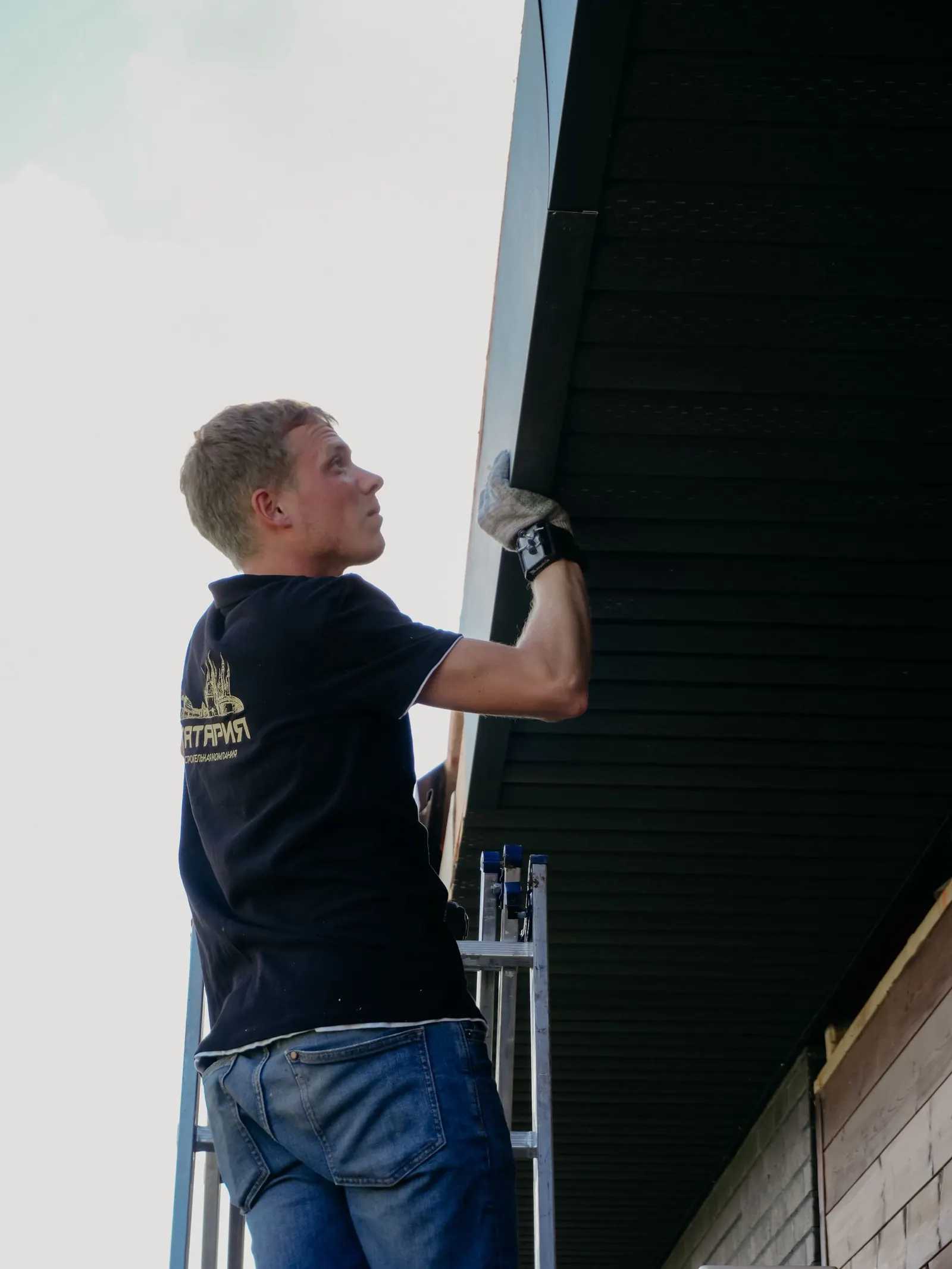
Roof edges, soffit returns and fascia transitions are where a building is most often opened up — by weather, by age, or by an animal working a seam that was already loose.
Exclusion work happens in exactly these places: at height, at transitions, and on materials that have to be cut and fitted to the structure in front of you rather than ordered to a standard size.
Active access
Exclusion starts with finding the access that is actually being used
A building can have several openings and only one of them may matter. The inspection separates active access from openings that are simply present.
That means reading the structure and the evidence together: where activity is heard inside, what the exterior shows at the roofline and grade level, how additions and older sections were built, and which materials have failed. Two houses on the same street can have completely different answers.
Where access happens
The parts of a building wildlife uses
Access is rarely a neat hole. It is usually a transition, a failure or a penetration that was never sealed properly.
- Roofline and roof edges
- Roof-to-wall transitions, rake edges, drip edge and shingle terminations where materials meet at an angle and gaps open over time.
- Soffits and fascia
- Soffit returns, corners and fascia boards that have separated, softened or been pulled loose by weather or by an animal.
- Vents and louvers
- Gable vents, ridge and roof vents, dryer and bath exhaust terminations, and louvers with missing or damaged screening.
- Siding and trim
- Siding transitions, corner boards, J-channel ends and trim gaps at additions, dormers and porch rooflines.
- Foundation and grade level
- Sill plate and rim joist gaps, block and stone foundation openings, crawlspace access doors and vents at or below grade.
- Utility penetrations
- Openings around water lines, electrical service, gas lines, cable, condensate lines and old abandoned penetrations.
Species behavior
Different animals create different access problems
Exclusion is species-aware work. What holds against a mouse is not what holds against a raccoon, and bat work follows a different sequence entirely.
- Bats
- Use very small upper-structure gaps at roof edges, soffits and rake boards; exclusion is planned around occupancy, not sealed on sight.
- Squirrels
- Work along the roofline, gnawing at soffit corners, fascia returns and vent screening to widen an opening.
- Raccoons
- Apply real force at soffits, roof vents and chimney areas; access points are usually torn rather than found.
- Mice and rats
- Move through small gaps at foundations, utility penetrations, garage areas and framing cavities.
- Skunks, opossums and groundhogs
- Use ground-level and under-structure openings at decks, porches, sheds and crawlspaces.
Two different jobs
Removal and exclusion answer different questions
- RemovalAddresses the animal
- It resolves what is happening in the structure right now — the activity, the location and the animal using the space.
- ExclusionAddresses the building
- It addresses the openings and vulnerable areas that made the structure usable in the first place, so the same access is not left waiting.
Important
Closing an opening before you understand it can make the problem worse
- Animals still inside can be sealed in, which creates damage and odor problems.
- Trapped animals often force a new opening, sometimes in a worse location than the original.
- Young animals may be present in the structure, which changes the appropriate approach and the timing.
- The obvious hole is not always the one being used, so the real access can stay open.
If you have found a suspected opening, it is better to note it and describe it than to close it.
Our approach
How Little Wolf handles exclusion work
Specifics change with the property. The order of thinking stays the same.
Inspection
Walk the structure to identify active access, likely access and conditions that make a repair unlikely to hold.
Assessment
Determine what the species is doing, whether animals are currently inside and how the areas connect.
Wildlife resolved first
Where animals are using the structure, that is addressed before openings are closed.
Entry-point repair
Address openings with materials suited to the location, the species and the way that area is built.
Review
Explain what was found, what was addressed and what conditions on the property are worth watching.
Exclusion questions
Questions property owners ask about exclusion
Answers here are general. What applies to your property depends on what the inspection finds.
- What is wildlife exclusion?
- Wildlife exclusion is the structural side of a wildlife problem: identifying the openings and vulnerable areas animals are using to get into a building, and addressing those areas so the same access is not simply left available.
- Is exclusion the same as removal?
- No. Removal addresses the animal that is using the structure now. Exclusion addresses how the structure is being accessed. A property may need one, the other or both depending on what the inspection finds.
- Why shouldn't I just seal the hole I found?
- Sealing an opening while animals are still inside can trap them in the structure. That can lead to animals dying inside walls or attics, or forcing new damage as they try to get out. It can also close the wrong opening while the actual access stays open. Inspection comes first.
- How do you know which openings are being used?
- Active access usually leaves evidence — wear patterns, staining, disturbed insulation, damaged material, droppings or displaced screening — read together with where activity is being seen or heard inside.
- Do you address every opening on a house?
- Not automatically. The inspection distinguishes between conditions that matter for the species and situation involved and conditions that do not. What is recommended is explained rather than applied as a fixed package.
- What materials are used for entry-point repair?
- It depends on the location, the species and how that part of the building is constructed. Roofline, vent, soffit, foundation and utility areas each call for different approaches, and the material has to suit the surface it is fastened to.
- Can exclusion be done in winter?
- Structural conditions can be inspected year-round, and cold weather often increases the activity that reveals them. Timing for specific species and specific work is discussed based on what is found.
- Will exclusion also help with attic insulation problems?
- Exclusion and attic work are related. Insulation work in a space that is still accessible to wildlife is usually premature, so access is addressed first where that is what the property calls for.
Related services
Related Little Wolf services
Think something is getting into your building?
Describe where the activity is happening and what you have found. Little Wolf will inspect the access before anything is closed.
- Phone
- (315) 924-6798
- Based in
- Penn Yan, NY