
Rat Control
Rat Control inPenn Yan, NY
Rat activity often involves more than the area where the animal is first seen. Little Wolf evaluates signs of activity, likely travel areas and structural access conditions to determine the appropriate rat-control and property-protection approach.
What we evaluate
- Droppings & gnawing
- Signs left along travel areas, storage spaces and basement edges.
- Burrows & ground activity
- Openings or disturbed ground near a foundation or slab.
- Basements & crawlspaces
- Sill, rim and perimeter areas where framing meets masonry.
- Garages & foundations
- Door transitions, slab edges and deteriorated masonry.
- Exterior cover
- Decks, skirting, landscaping edges and stored materials against a building.
The animal
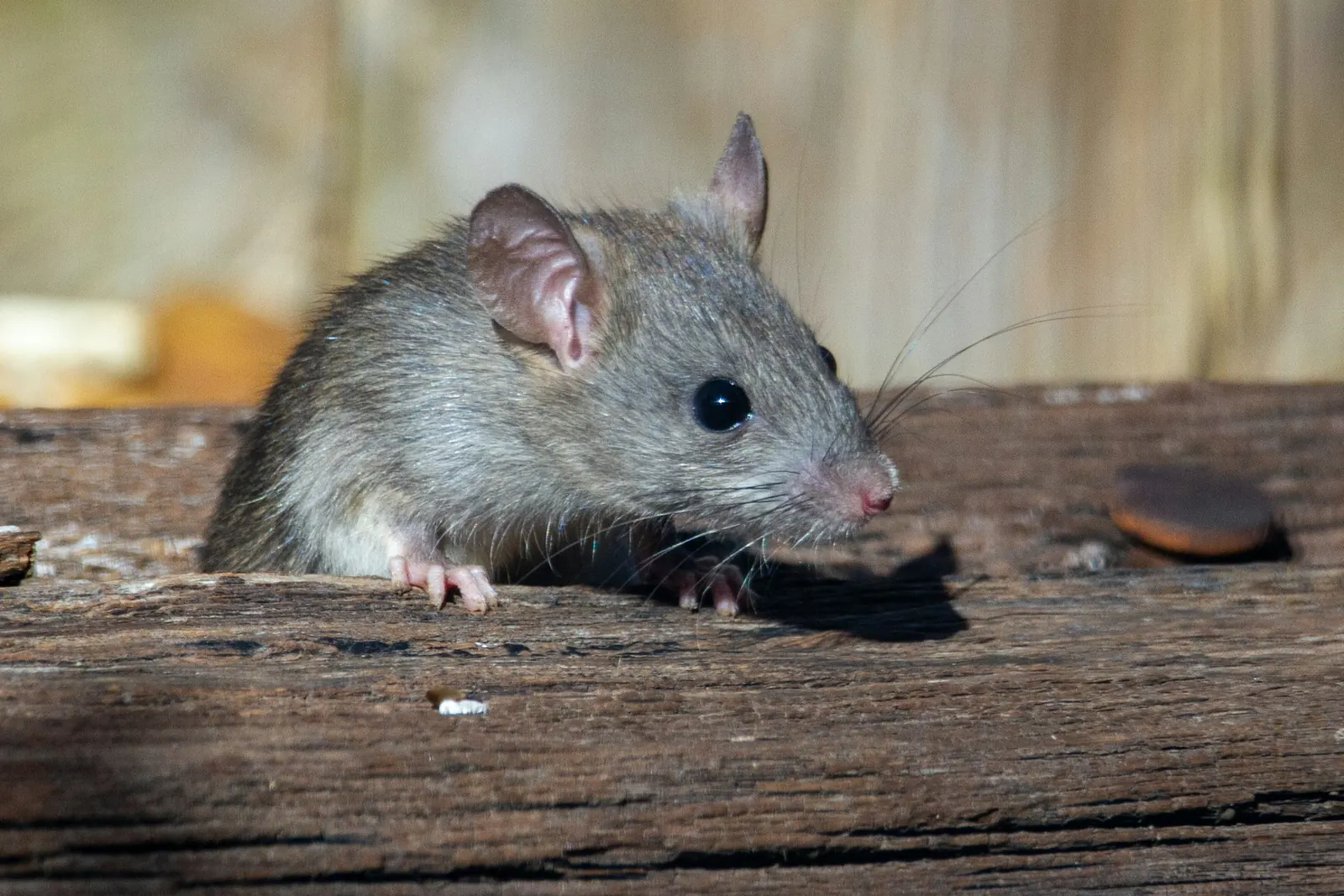
Rats work the exterior before they work the building
Rats establish themselves outside first — under decks and sheds, along foundations, in woodpiles and clutter at grade — and then test the structure from that position.
Treating a rat problem as an indoor problem misses most of it. Exterior conditions and structural access have to be read together.
Where It Starts
Rat activity often follows a repeatable route into the property.
Rats tend to move between exterior shelter, structural openings and interior spaces rather than staying in one place. Understanding that movement is a large part of understanding the problem.
Depending on how a building was constructed, modified and maintained, access may involve foundation openings, garage-door transitions, damaged exterior materials, utility penetrations, crawlspace openings, gaps around attached structures or other accessible lower structural areas. Not every rat problem begins at ground level, and no two properties present the same pattern — one building can have several conditions worth evaluating while another has one.
Activity Indicators
Signs rats may be using the property
No single sign confirms the species on its own. Read together, these details help describe where activity is concentrated and how the animals may be moving.
- Droppings
- Droppings may appear along travel areas, storage spaces, basement edges or locations where animals are repeatedly active.
- Gnawing and chewing
- Rats may gnaw accessible materials and leave visible damage along travel or access areas.
- Scratching or movement
- Sounds may be heard in wall systems, floors, ceilings, basements or enclosed structural spaces.
- Rub or travel marks
- Repeated movement through the same confined areas can sometimes leave visible signs along surfaces.
- Burrows or ground activity
- Openings or disturbed ground near structures may indicate animal activity and should be evaluated in context.
- Repeated sightings
- Seeing rats repeatedly around the same part of a property may indicate established travel, shelter or access conditions.
Structural Areas
Where rat problems often develop
Rats may travel through several connected areas of a property rather than remaining where they are first noticed. A sighting in one space does not describe the full picture.
Lower structural areas, exterior cover and concealed cavities frequently relate to one another. That connection is why an inspection looks at how spaces link together, not only at the room where something was heard or seen.
- Basements
- Perimeter edges, sill and rim areas, and the transitions where framing meets masonry.
- Crawlspaces
- Low, undisturbed space in direct contact with grade, framing and utility runs.
- Garages
- Door transitions, slab edges and shared walls between the garage and the house.
- Foundation areas
- Ground-level transitions, deteriorated masonry and openings around the base of a building.
- Utility spaces
- Mechanical rooms and chases where pipes, wiring and ducting pass through structure.
- Wall systems
- Concealed cavities that connect lower structural areas with other parts of the building.
- Storage areas
- Stacked materials and stored goods that provide cover along a travel route.
- Exterior areas around structures
- Decks, skirting, landscaping edges, outbuildings and stored materials against a building.
Behavior
Why rats establish activity around buildings
Rats use properties for practical reasons. Well-kept homes and properties can have rat activity — what matters is what the site offers and what is accessible.
- Shelter
- Structures and the spaces around them offer protected, stable cover.
- Food sources
- Stored feed, pet food, refuse and garden or outbuilding materials can support activity.
- Water
- Standing water, drainage areas and damp conditions can be a practical draw.
- Nesting or resting areas
- Quiet, concealed spaces inside or against a structure can be used for shelter.
- Exterior cover
- Dense landscaping, stacked materials and skirting provide protected movement.
- Structural openings
- An existing opening is easier to use than one that has to be created.
- Seasonal conditions
- Changing weather and food availability can shift where animals travel.
- Easy travel routes
- Edges, walls, foundations and utility lines can act as consistent runways.
Around the Structure
The problem may begin outside the building.
Rat activity can involve exterior shelter or ground activity before it ever involves the inside of a structure.
Areas worth evaluating often include foundations, sheds, decks, landscaping edges, stored materials, outbuildings and other protected exterior spaces. Conditions like these can support movement and shelter close to a building, which is part of why exterior areas are inspected alongside the structure itself.
An exterior hole is not automatically a rat burrow. Ground openings should be evaluated together with location, surrounding signs and observed activity before any conclusion is reached.
Entry Conditions
A rat only needs one workable route into the structure.
Access is about what is usable, not about how many openings a building has. A single practical route can support ongoing activity while other conditions on the property stay unused.
Not every visible gap on a building is being used, and conditions that look minor can matter more than conditions that look dramatic. That is why openings are evaluated in relation to the activity described rather than in isolation.
- Damaged or deteriorated openings in exterior materials
- Foundation transitions where framing meets masonry or concrete
- Utility penetrations for plumbing, electrical, gas or drainage lines
- Garage door transitions, corner seals and slab edges
- Crawlspace entries, hatches and vent openings
- Deteriorated structural materials at ground level
- Gaps associated with additions, porches and attached structures
Our Approach
How Little Wolf approaches rat activity
The specifics change from property to property. The order of thinking stays consistent.
- Understand where the activity is occurring
- Gather information about sightings, sounds, signs and exterior activity around the property.
- Evaluate likely travel and access areas
- Inspect the structural and exterior conditions associated with the activity described.
- Determine the appropriate control approach
- The response depends on the property and the conditions present at the time of the visit.
- Address structural access where appropriate
- Openings or vulnerable areas may require exclusion or corrective structural work.
Two Different Jobs
Rat control and rat exclusion solve different parts of the problem
Depending on the conditions found, a property may require one, the other or both.
Rat control
Addresses current animal activity
This is the response to what is happening on the property now — where animals are being seen or heard, how the activity is distributed and what the conditions call for.
Rat exclusion
Addresses structural access
This is work on the structural openings or vulnerable areas animals may be using to access the property. It is recommended where the building and the findings support it.
Below the Living Space
When rat activity moves below the living space
Much of what happens in a rat problem occurs where nobody spends time — basement edges, crawlspaces, utility penetrations and the transitions between them.
Sill and rim areas, foundation transitions, concealed travel paths and storage areas often relate to one another. A sign found in one location may lead an inspector to evaluate connected structural areas nearby, including spaces that appeared unaffected at first.
Movement
Rat activity can extend through a building
Activity is not limited to the lower portions of a structure. Once inside, animals may travel through wall systems, chases or other connected areas.
Attics are not automatically the center of a rat problem, and whether upper areas are involved depends on the property and what the inspection finds. Where activity has affected attic insulation, that work can be addressed separately.
If insulation is involved
Insulation removal and installation is available where the condition of the space calls for it — not as an automatic part of rat work.
Local Rat Control
Rat control from Penn Yan across the surrounding region
Little Wolf Wildlife Control is based in Penn Yan and serves homeowners and property owners throughout the Finger Lakes and surrounding communities.
Based in Penn Yan, New York
Rat work in the region regularly involves older foundations, additions, outbuildings and attached structures — properties with more ground-level transitions worth evaluating.
Rat Questions
Questions property owners ask about rats
Answers here are general. What applies to your property depends on what is found during an inspection.
- How are rats getting into my house?
- Usually through a workable opening somewhere along the structure — often at ground level. Foundation transitions, utility penetrations, garage areas, crawlspace entries and deteriorated exterior materials are all worth evaluating. Which of them matters depends entirely on the property, which is why the structure is inspected rather than assumed.
- Why am I seeing rats around my foundation?
- The base of a building often combines cover, travel routes and access to structural openings. Activity noticed along a foundation may reflect exterior shelter nearby, movement between outside and inside, or both. The location of the sighting is a starting point, not a conclusion.
- Can rats live in a basement or crawlspace?
- Those spaces can support activity because they are quiet, concealed and directly connected to the exterior at multiple points. Signs found there are evaluated alongside conditions at the foundation and around the structure.
- What does a rat burrow look like?
- Ground openings near a structure are sometimes associated with rat activity, but not every hole in the soil is a burrow, and other animals and natural conditions can create openings as well. Location, the condition of the opening, surrounding signs and observed activity patterns need to be considered together before any conclusion is drawn.
- Can rats move through walls?
- Once an animal is inside a structure, wall systems, chases and utility runs can connect areas that feel separate from the living space. That is why activity noticed in one room does not necessarily indicate where the animal is entering.
- Why does rat activity keep returning?
- If access into or around the structure remains available, the property stays usable. Recurring activity often points toward a structural condition or exterior shelter situation that has not yet been identified or addressed.
- What is rat exclusion?
- Exclusion is structural work focused on the openings and vulnerable areas an animal may be using to reach a building. It is evaluated based on the property and the conditions found, and it is not appropriate or necessary on every job.
- Should I seal a hole if rats may still be using it?
- Closing a suspected active access point without understanding the situation can trap animals inside the structure or change how they move through it, which can make the problem harder to resolve. The better step is having the activity and the opening evaluated first, then deciding how and when to address it.
- Are rats and mice handled the same way?
- No. They are different animals with different behavior, movement patterns, physical capabilities and relationships to a property. Rat activity often has a stronger exterior and ground-level component, while mouse activity may center on smaller openings and different parts of a structure. Because of that, the appropriate approach can differ.
Related Services
Related Little Wolf services
Mouse Control
Smaller rodent activity and the openings associated with it.
Wildlife Control
All nuisance wildlife species Little Wolf handles.
Wildlife Exclusion
Structural work focused on access into the building.
Attic & Insulation Services
Insulation removal and installation where conditions call for it.
Service Areas
Where Little Wolf works across the Finger Lakes region.
Seeing signs of rat activity?
Tell Little Wolf where you are seeing, hearing or noticing activity around the property, and where on the structure the signs are concentrated.
- Phone
- (315) 924-6798
- Based in
- Penn Yan, NY